
Menu
Table of Contents
Buoyant Force: Interaetherspace + Displacement Gravity
A beach ball that is pushed underwater will fight back with surprising power. The moment you let go, it shoots up into the air.
This upward push experienced by objects immersed in a fluid is called the buoyant force.
It is why heavy steel cruise ships can float effortlessly on the ocean, while a tiny pebble sinks straight to the bottom.
The Cause: Pressure Differences
The pressure in a liquid increases with depth because the deeper you go, the more liquid there is pressing down from above.
When an object is submerged in water:
- The top of the object is at a shallower depth, experiencing less downward pressure.
- The bottom of the object is deeper, experiencing more upward pressure.
Because the upward force at the bottom is greater than the downward force at the top, there is a net upward force acting on the object. This net upward force is the buoyant force.
Archimedes’ Principle
The definitive rule governing buoyancy was discovered by the ancient Greek mathematician Archimedes. Archimedes’ Principle states:
Any object, wholly or partially immersed in a fluid, is buoyed up by a force equal to the weight of the fluid that the object displaces.
If you submerge a block into a full beaker of water and of water spills out, the upward buoyant force acting on that block is exactly equal to the weight of that of water.
The Rules of Floating and Sinking
Whether an object sinks or floats doesn’t depend on its total weight, but rather on how its weight compares to the buoyant force. This is fundamentally a battle of densities:
| Scenario | Physics Breakdown | Result | Example |
|---|---|---|---|
| Object is denser than fluid | The object’s weight is greater than the maximum buoyant force. | Sinks | An iron nail in water |
| Object is less dense than fluid | The object’s weight is less than the displaced fluid’s weight. | Floats | A block of wood or a life jacket |
| Object and fluid have equal density | The weight and buoyant force are perfectly balanced. | Neutral Buoyancy | A submarine or a fish hovering in place |
Real-World Applications
Buoyant force is a cornerstone of marine engineering and nature:
- Submarines: Subs control their buoyancy using ballast tanks. To sink, they fill the tanks with water (increasing density). To rise, they pump compressed air into the tanks to push the water out, reducing their overall density so the buoyant force can lift them up.
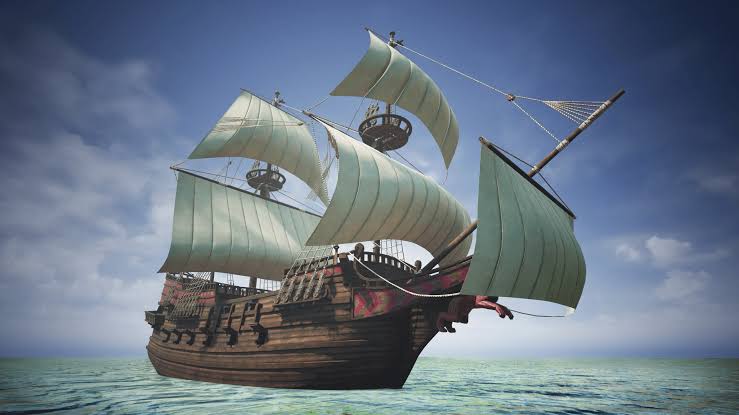
- Ship Design: Steel is much denser than water, but ships are designed with massive, hollow hulls. This hollow shape ensures the ship displaces a massive volume of water, generating a buoyant force large enough to support the weight of the entire vessel and its cargo.
- Hydrometers: These are tools used to measure the density of liquids (like battery acid or milk) based on how high or low a calibrated float sinks into the liquid.
Leave a Comment
Thank you for your comment!
It will appear after review.