
Menu
Table of Contents
The previous section explained how thinking is the use of mental force to connect ideas to get more details or complete the whole picture.
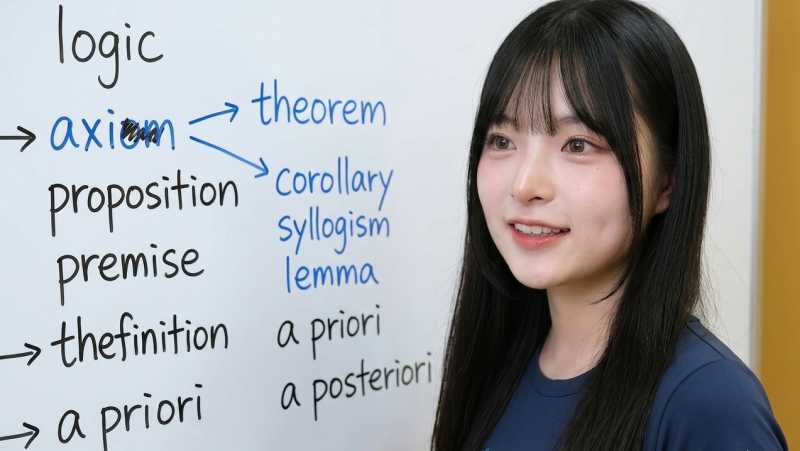
The thinking process leads to logic which is the connection of related ideas.
When we have unrelated ideas, we do not connect them.
Usually, we use logic and our intellect whenever we need to solve a problem.
For example, when want to go to a certain place, we check the map so we can trace a logical path towards it and use our intellect to find the most efficient or least expensive or fastest way to get there.
If we were omniscient, we would be able to reach our destination without using any map.
In this case, we would use our intuition to get the whole picture immediately from our higher mind.
However, in reality, our intellect is limited and obstructed by the Negative Force.
And so not all of us reach our destination in the perfect way that we planned.
Ordinary thinking is the application of intellect in the ordinary way within this limitation.
Critical thinking is the application of intellect with an added Positive effort to push against or break through such limitation.
- This is why it is commonly called out-of-the-box thinking which happens when we apply more energy or effort in our thinking process.
The big misconception is to critical thinking needs more brain power.
But brain power is of the lower or physical mind and uses electromagnetism instead of the aether.
Positive effort does not mean more negative or material force like amps or volts.
Instead, it needs more subtlety and refinement to breach the limitation imposed by the Negative Force.
Therefore the key component of Critical Thinking is the Positive Force, just as the key component of ignorance is the Negative.
Dialectics as a Tool
The Greeks created dialectics as a tool that uses logic to solve problems.
Unlike ordinary reasoning (we defined reasoning as connection of cause and effect), the orignal dialectics has reference to the True Cause or True Essence of things.
This Essence is called the Dharma in Hinduism and Taoism in Taoism.
In the dialectical process, we define idea or essence as true existence.
The power of dialectic lets the reason attain that other sort of knowledge using the hypotheses as steps into a world which is above hypotheses, so that she may soar beyond them into the original principle
The focus on the True Nature of Things allows everything to be understandable and explainable.
Since the word “dialectics” has been commonly been misused without reference to the Dharma, we will call the orignal dialectics as Socratic Dialectics.
Leave a Comment
Thank you for your comment!
It will appear after review.