
Table of Contents
In 1772, a credit crisis originating in London hit and spread over Europe and affected the American colonies.
The cause was the creation and over-circulation of bounced checks then known as redrawn bills of exchange. Speculators used these bills to gamble with bank money and the deposits of other people.
The end result was a loss of capital. This created a credit crunch which led to an economic downturn hitting Europe and too-big-to-fail companies.
One of them was the East India Company which had to be bailed out with taxpayer money, specifically from the tea trade.
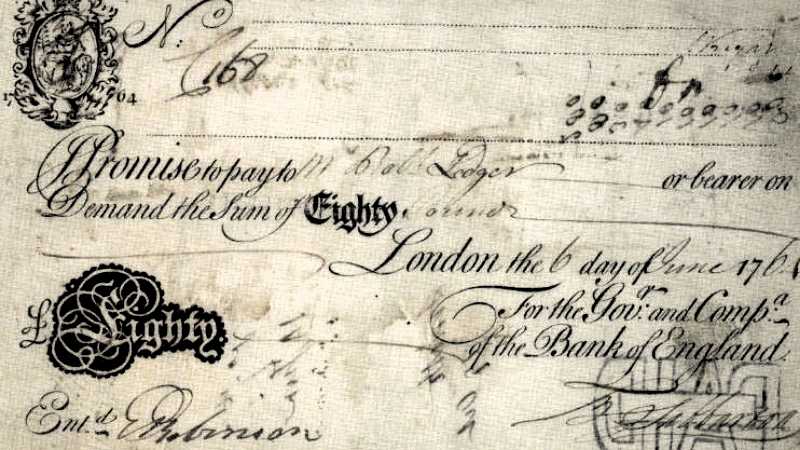
Sound familiar? This is because the Credit Crisis of 1772 was essentially the same as the Credit Crunch of 2008 and even similar to the 1997 Asian Financial Crisis.
Simply put, the bankers thought that they were using their money to create more money. In reality, they merely used their money under the ILLUSION that they were making more money.
- The 2008 Financial Crisis was caused by investment banks pooling debt and turning it into insurance. This collapsed when all the investees claimed insurance at the same time.
- The 1997 Asian Crisis was caused by foreign banks giving money to Asian corporations who used it for speculation. This led to unproductive large projects that ended up creating non performing loans.
- The 1772 Credit Crisis was caused by Ayr Bank givng a lot of loans to European mercantile companies, most of which collapsed because they were not credit worthy.
All three were caused by the speculation mentality.
The debtors of such a bank..were likely..chimerical projectors, the drawers and re-drawers of circulating bills of exchange, who would employ the money in extravagant undertakings..

Same Problem, Same Wrong Solutions
The solution to all three cases was the same: bailouts.
Good money was sacrificed in order to get the economy running again.
- The 2008 Financial Crisis was ‘solved’ by TARP to bail out the investment banks
- The 1997 Asian Crisis was ‘solved’ by the IMF giving loans to those who suffered from the crisis
- The 1772 Credit Crunch was ‘solved’ by the 1773 Tea Act which bailed out the East India Company
Since those solutions did not address the root causes, more problems emerged.
- TARP and quantitative easing (QE) created the huge American debt without increasing GDP, in a phenomenon known as secular stagnation
- The Asian Crisis led to protests which toppled governments in Thailand, Indonesia, and the Philippines. Update 2025: In Thailand, this led to the rise of the monary and the military which is now causing the Thailand-Cambodia conflict
- The Tea Act angered colonists, helping fuel the American Revolution, leading to the loss of the American colonies for Britain.

The Quantitative Easing Monster
The 2008 Financial Crisis led to Quantitative Easing (QE) which floods the financial industry with wholesale money – money from central banks that goes to commercial banks.
This is different from retail money which is the money from the banks that is lent or circulated into the general economy.
The big problem is that that wholesale money does not leave the financial industry into the general economy to create employment.
Instead, it stays within the financial industry and the money markets, such as in the finance between corporations.
This is why economies still do not grow despite massive QE stimulus. Japan is a clear example of this.
Credit Crises are caused by violation of the 3rd Law of Value which is balance.
The imbalance happens when investors, capitalists, and speculators have a lot of money and want to earn more.
Credit Crises do not usually happen during a growth period when economies still have not achieved maximum economy.
It usually happens when a society has become quite wealthy.
The problem is that money gets its value from being spent or invested, and cannot be left idle. This forces rich people to find new ways to invest their money.
But they are naturally unable to find new opportunities – if people already have homes, cars, cellphones, etc that they need, they don’t want to buy more.
This lack of demand reduces investment opportunities.
And so investors tend to speculate – they create unsustainable projects that use the excess wealth of society.
- The Japanese QE merely puffed up Japanese corporations
- The US QE also puffed up tech companies like Apple and Tesla, and led to the tech startup boom where unproven business models like WeWork received a lot of investment
Update April 2026: The Supereconomic Solution
Since Credit Crises are caused by imbalance during periods of wealth, Supereconomics advocates for barter credits both as prevention and cure .
Prevention
Barter credits prevent speculation and bubbles by raising interest rates on a nation’s clearing fund and weakening the currency in order to spur exports (goods) or tourism (services).
This will:
- divert the nation’s productivity towards serving foreign countries that are in need of goods and services
- prevent speculation into things that have no demand by sucking such hot money
Cure
If a society is already suffering a crisis, then barter credits can revive the economy without going through QE.
The money for operating capital and salaries can be done on barter credit so that companies can continue operating.
People with mortgages can pay them off in kind through the points banking system.
This will remove the need for TARP and financial bailouts by tapping productvity directly.
Leave a Comment
Thank you for your comment!
It will appear after review.