Table of Contents

There is an ocean of difference between a real all-renouncing devotee of God and a householder devotee. A real sannyāsi, a real devotee who has renounced the world, is like a bee. The bee will not light on anything but a flower. It will not drink anything but honey.
But a devotee leading the worldly life is like a fly. The fly sits on a festering sore as well as on a sweetmeat. One moment he enjoys a spiritual mood, and the next moment he is beside himself with the pleasure of ‘woman and gold’.
“A devotee who has really and truly renounced all for God is like the chatak bird. It will drink only the rain-water that falls when the star Svati is in the ascendant. It will rather die of thirst than touch any other water, though all around there may lie seven oceans and rivers full to the brim with water. An all-renouncing devotee will not touch ‘woman and gold’. He will not keep ‘woman and gold’ near him lest he should feel attached.”

“It was honour in the sight of others, but nothing to him. Whether you — a deputy magistrate — or this youngster Niranjan honours me, it is all the same to me. And I tell you this truthfully: the idea of controlling a wealthy man never enters my mind.
Surendra once said, rather condescendingly, that Rakhal’s father could sue me for letting Rakhal stay with me. When I heard this from Manomohan, I said: ‘Who is this Surendra? How does he dare make a remark like that? He keeps a carpet and pillow here and gives me some money. Is that his excuse for daring to make such an impudent remark?’”
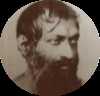
Master’s genuine love for his disciples
(To Adhar) “Listen. There is no scarcity of moths when the lamp is lighted. When God is realized, He Himself provides everything for His devotees. He sees that they do not lack anything.
When God is enshrined in the heart, many people come forward to offer their services.
“Once a young sannyasi went to a householder to beg his food. He had lived as a monk from his very birth; he knew nothing of worldly matters. A young daughter of the householder came out to give him alms.
He turned to her mother and said:


“Listen. If a woman renounces everything for her paramour, she can say to him, if need be, ‘You wretch! I shall sit on your chest and devour you.’
“Nangta told me of a certain king who gave a feast to the sādhus, using plates and tumblers of gold. I noticed in the monasteries at Benares with what great respect the abbots were treated. Many wealthy up-country people stood before them with folded hands, ready to obey their commands. But a true sādhu, a man who has really renounced everything, seeks neither a gold plate nor honour. God sees that he lacks nothing. God gives the devotee everything that is needed for realizing Him.
Hazra entered the room and sat with the devotees on the floor. Hazra repeated now and then, “Soham! Soham!” “I am He! I am He!”
To Lātu and other devotees he often said:

He had said this once to Narendra.
The Master spoke to him.
“What you say is a very lofty thought. The aim of spiritual discipline, of chanting God’s name and glories, is to realize just that. A man attains everything when he discovers his true Self in himself. The object of sādhanā is to realize that. That also is the purpose of assuming a human body. One needs the clay mould as long as the gold image has not been cast; but when the image is made, the mould is thrown away. The body may be given up after the realization of God.
“God is not only inside us; He is both inside and outside. The Divine Mother showed me in the Kāli temple that everything is Chinmaya, the Embodiment of Spirit; that it is She who has become all this — the image, myself, the utensils of worship, the door-sill, the marble floor. Everything is indeed Chinmaya.
“The aim of prayer, of spiritual discipline, of chanting the name and glories of God, is to realize just that. For that alone a devotee loves God. These youngsters are on a lower level; they haven’t yet reached a high spiritual state. They are following the path of bhakti. Please don’t tell them such things as ‘I am He’.”
Like the mother bird brooding over her chicks, Sri Ramakrishna was alert to protect his devotees.
Adhar and Niranjan went out on the porch to take refreshments. Presently they returned to the room.
Sri Ramakrishna sat on the floor for his supper. It was a light meal of a little farina pudding and one or two luchis that had been offered in the Kāli temple. M. and Lātu were in the room.
The devotees had brought various sweets for the Master. He touched a sandesh and asked Lātu, “Who is the rascal that brought this?” He took it out of the cup and left it on the ground. He said to Lātu and M.: “I know all about him. He is immoral”

M. had received an English education. Sri Ramakrishna said to him: “It is not possible for me to eat things offered by anyone and everyone. Do you believe this?”
After finishing the meal Sri Ramakrishna washed his mouth.
The moon rose in the clear autumn sky and was reflected in the river. It was ebb-tide in the Ganges and the river flowed south toward the sea.
Leave a Comment
Thank you for your comment!
It will appear after review.